



Salt is patient. It doesn’t damage your boat in one afternoon — it sits in the corners you can’t see, draws moisture out of the air, and slowly works its way into every fitting, terminal, and hinge until something seizes or corrodes. The good news is that the single most effective piece of maintenance you can do costs almost nothing and takes ten minutes: a thorough freshwater rinse after every trip in salt water. Skip it and you’ll pay for it later in pitted hardware and failed connections. Build it into your routine and your boat will look and run better for years longer.
Why Salt Is So Hard on Your Boat
Saltwater corrosion isn’t dramatic; it’s relentless. Salt crystals hold onto moisture, so even after your boat looks dry, the salt left behind keeps a thin film of damp, conductive grime against metal surfaces. That’s the perfect recipe for corrosion — especially on aluminum, on stainless that isn’t truly marine-grade, and anywhere two different metals meet. It chalks your gelcoat, stiffens your canvas, clouds your windows, and eats at electrical connections from the outside in. A lot of the common problems boaters end up fixing trace back to salt that was never rinsed off in the first place.
Rinse It Down the Moment You’re Back
Timing is everything. The longer salt sits, the more it dries, hardens, and works into seams, so the best rinse is the one you do the moment you’re back on the trailer or in the slip — not next weekend. Start at the top and work down: hardtop, canvas, windows, then the deck, hardware, and hull. Use a gentle stream and plenty of fresh water rather than a high-pressure blast, which can force water past seals and into places it shouldn’t go. You don’t need soap every time — a plain freshwater rinse does most of the work. Save the soap and wax for a deeper clean every few trips.
[IMAGE 1 — thumbnail placement reference: see image-prompts.txt]
The Spots Most Boaters Miss
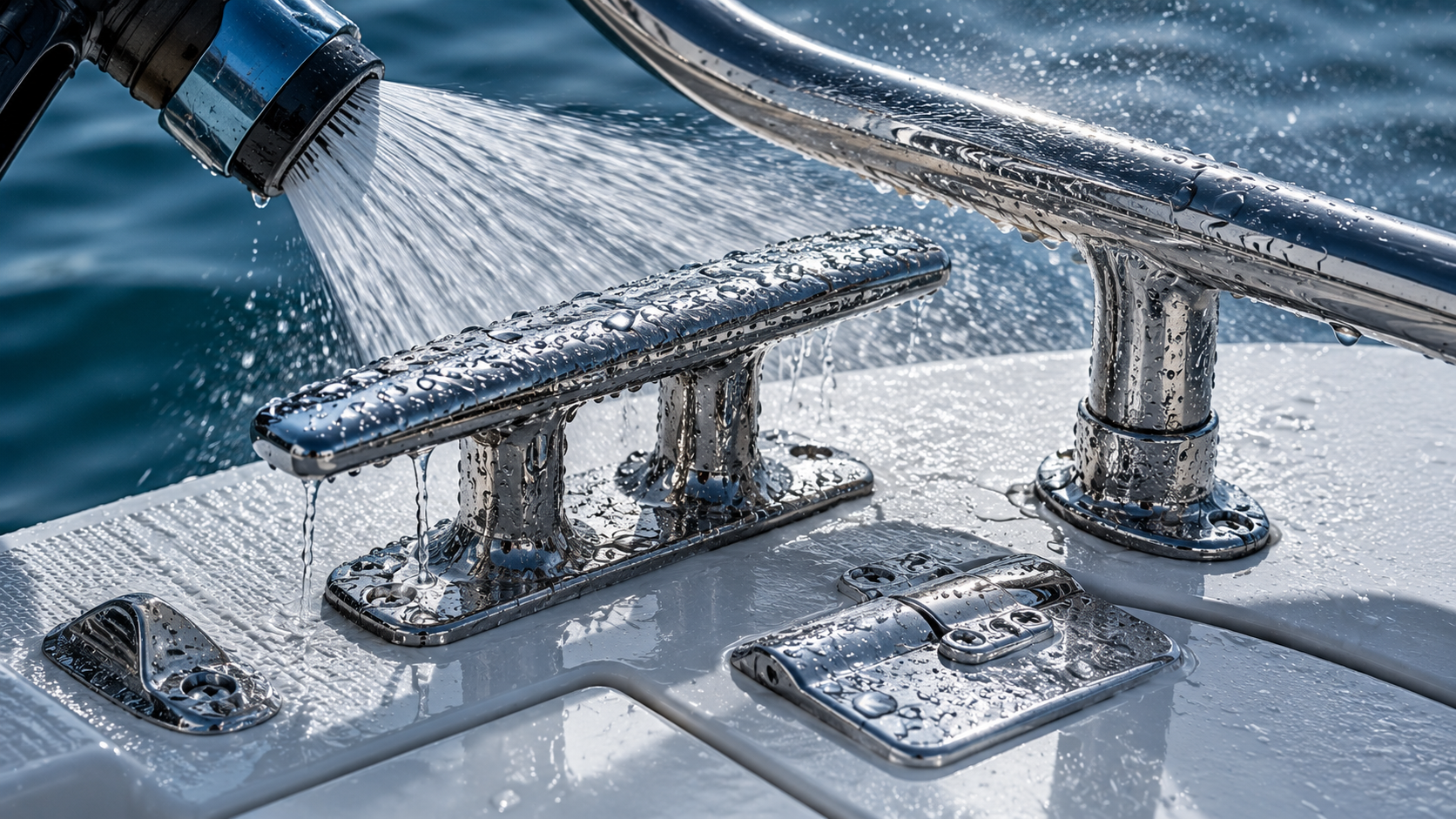
The deck is easy to remember; the important stuff is easy to forget. Rinse your stainless rails, cleats, and hinges thoroughly, since those are the parts that show corrosion first. Flush the salt off your anchor and chain before it goes back in the locker. Give your electronics, connectors, and any exposed wiring a light spray and let them dry — and while you’re there, it’s worth knowing that keeping your batteries and terminals clean is half the battle in preventing the corrosion that kills electrical systems. Don’t forget the underside of hatches, the inside of rod holders, and the trim tabs. These are the hidden spots where salt quietly does its worst.
[IMAGE 2 — fresh water rinsing over stainless cleats and rails, no text. See image-prompts.txt]
Trailer Boaters, Flush the Engine Too
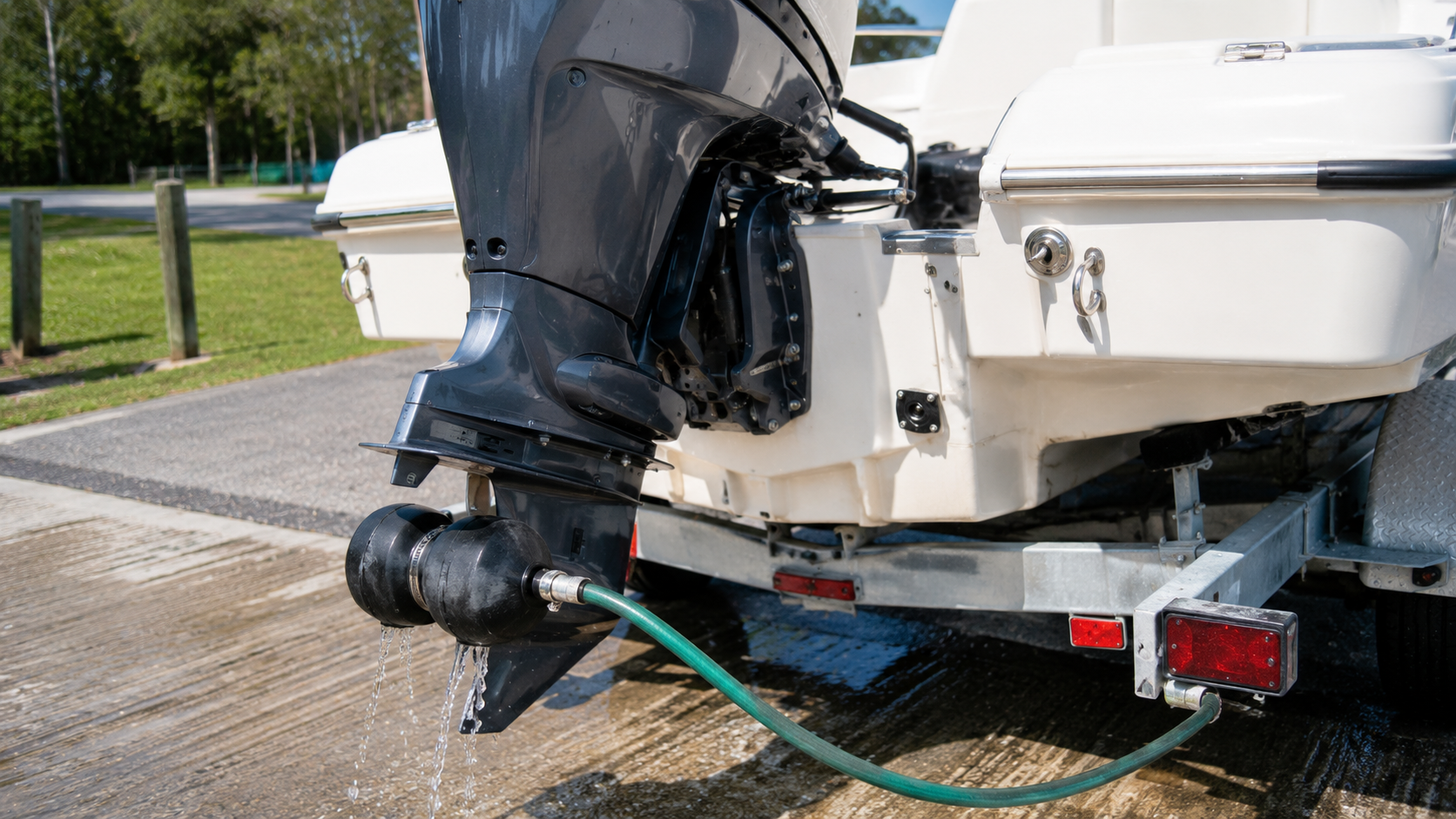
If you trailer your boat, the rinse doesn’t stop at the hull. Running your outboard or sterndrive in salt water means salt is sitting inside the cooling passages, and that’s where real engine damage starts. Hook up a set of muffs or use the engine’s flush port and run fresh water through it for the time the manufacturer recommends — usually a few minutes — every single time you pull out of salt water. While you’re at the ramp, give the trailer a rinse as well; salt is just as hard on trailer frames, brakes, and bearings as it is on the boat, and a clean trailer is part of getting it ready for the next launch.
[IMAGE 3 — flushing an outboard with freshwater muffs, no text. See image-prompts.txt]
Make It a Habit, Not a Chore
The boaters whose vessels still look sharp after ten seasons aren’t the ones doing massive restoration projects — they’re the ones who never let salt sit in the first place. Keep a hose and nozzle ready where you store the boat so the rinse is the last thing you do before you walk away, the same way you’d lock the door on your way out. Ten minutes now saves you hours of polishing corrosion off hardware later, and it’s the cheapest insurance you’ll ever buy for your boat. This kind of small, consistent upkeep is the heart of keeping a vessel in good shape year-round.
A freshwater rinse is the least glamorous job on the boat and the one that pays off the most. It protects your hardware, your electronics, your engine, and your resale value, all for the price of a few minutes and some tap water. Make it the rule for every saltwater trip and you’ll spend far less time fixing things and far more time using the boat. How do you handle your post-trip rinse — got a routine that makes it quick? Share it in the comments and help a fellow boater keep the salt at bay.