


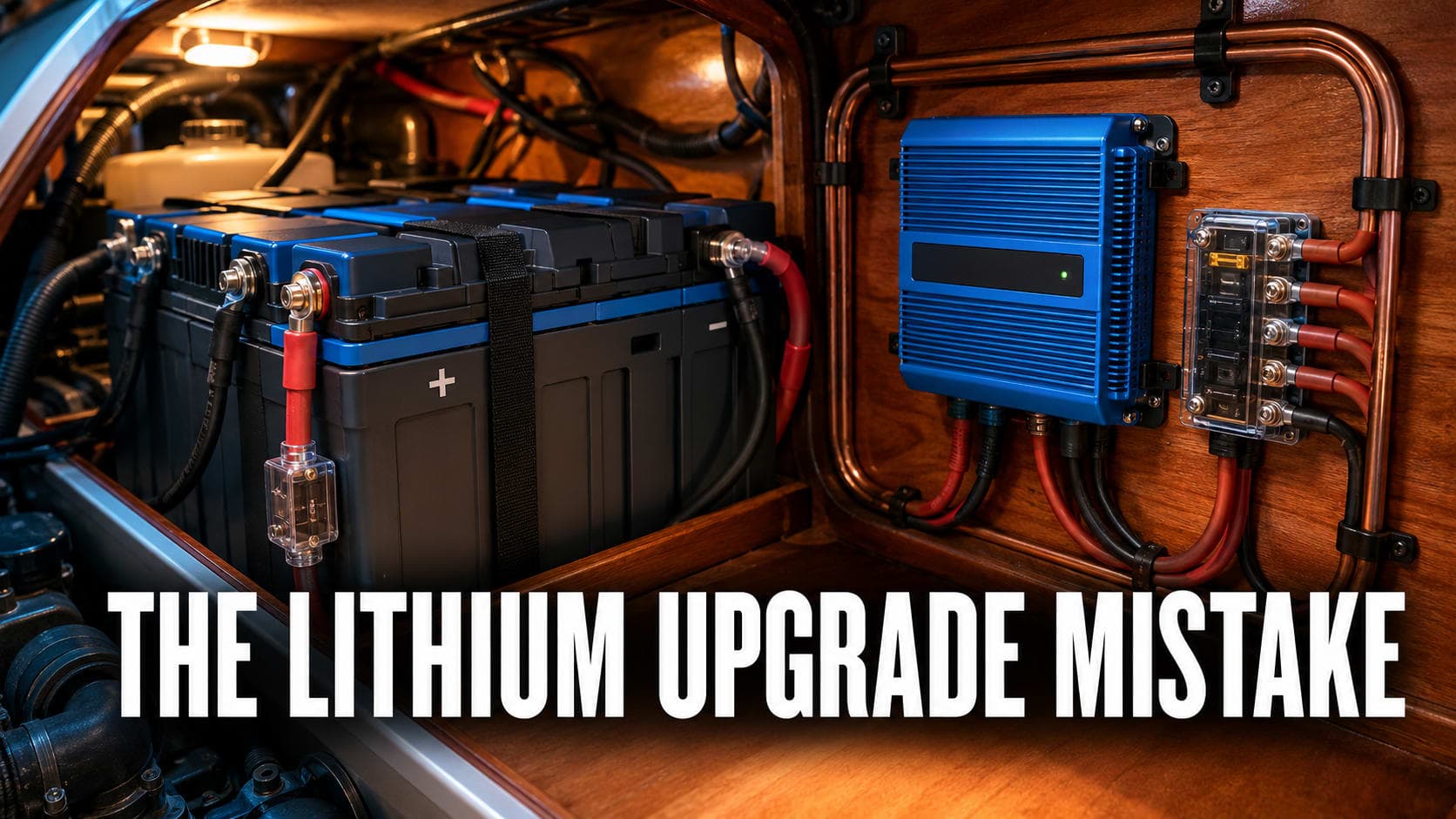

When I upgraded my house bank to lithium, I thought the hard part was over. New batteries in, wiring cleaned up, more usable capacity than I knew what to do with — it felt like a win. Then I noticed the problem. My lead acid start batteries weren't getting the kind of charge support they used to, and on a boat, that's the kind of oversight that bites you at the worst possible moment.
Here's the thing nobody warned me about: the moment you introduce a lithium house bank, the way your start batteries get topped up changes. Mixing chemistries isn't as simple as parallel-wiring everything and calling it done. I needed a proper way to step down and regulate power from the lithium side so the starts stayed healthy. This post walks through exactly what I did to fix it.
The Problem With Mixing Lithium and Lead Acid
Lithium and lead acid batteries don't play by the same rules. Lithium holds a much higher resting voltage, charges faster, and wants a different absorption profile than a lead acid start battery. If you just tie the two banks together and hope for the best, the start batteries either get overcharged, undercharged, or slowly boiled dry. I've written before about switching to lithium and why it's one of the best upgrades you can make — but this charging mismatch is the one caveat that deserves its own project.
The goal was to let the lithium bank do what it does best — store and deliver power — while feeding my lead acid starts at a voltage and current that keeps them healthy. That means putting something in between the two banks to manage the hand-off.
Why a DC-DC Charger Was the Right Fix
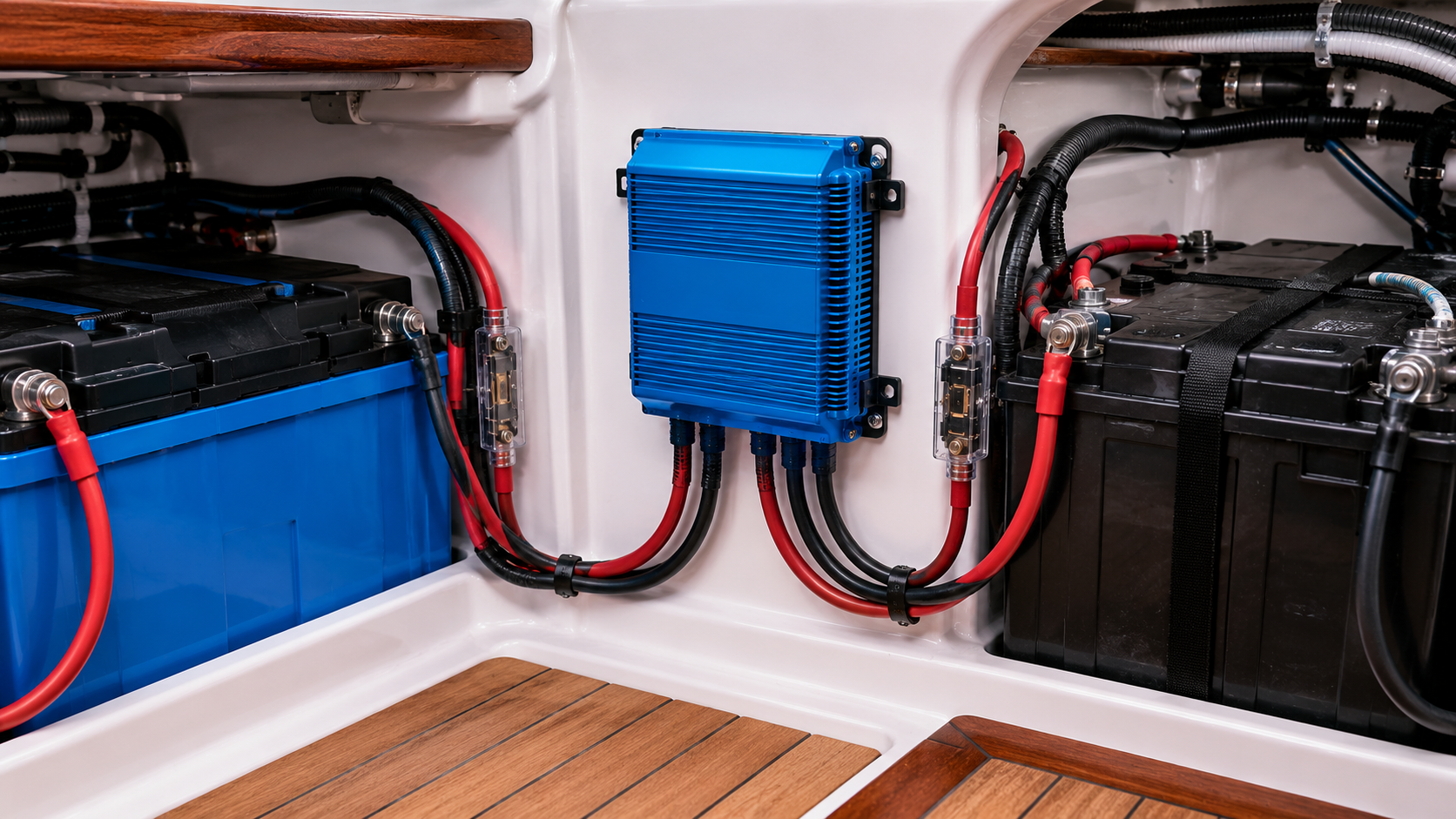
A DC-DC charger is the clean solution. It takes the lithium voltage as its input, steps it down, and feeds the start bank a proper lead acid charge profile — bulk, absorption, float — the way those batteries actually want to be charged. I went with the Orion Smart DC-DC charger because it's programmable, it's built for exactly this kind of cross-chemistry setup, and it doesn't pull current when the engine is off. That last part matters if you don't want your house bank silently draining into the starts overnight.
Pair the DC-DC with a battery combiner and the whole system tightens up. The combiner handles the alternator charging path when the engine is running and makes sure everything stays isolated when it isn't. Together they replace the old "tie everything together and pray" approach with a proper, supervised charge path.
Wiring It Up the Right Way
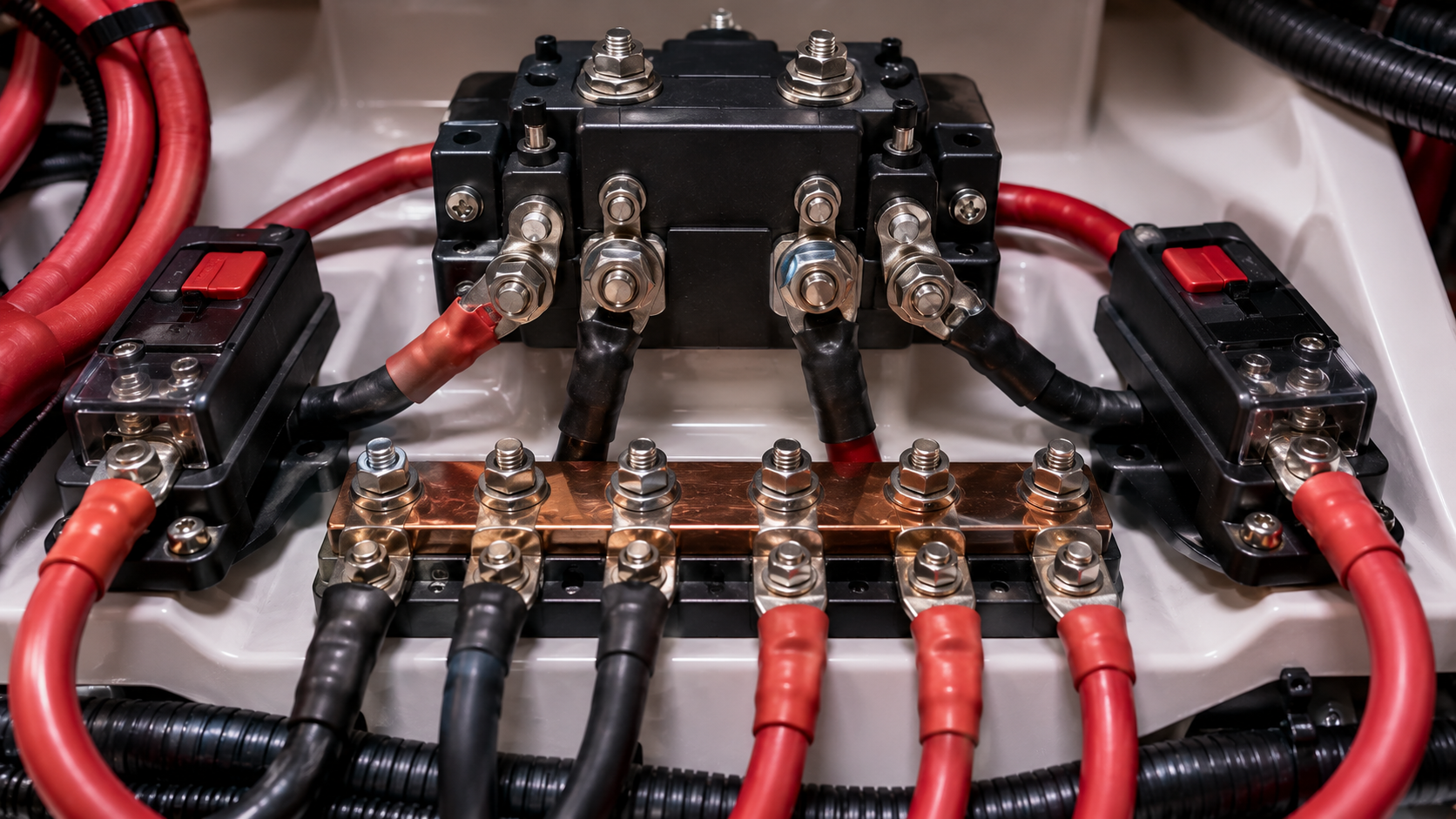
The install itself is not complicated, but it is unforgiving. Marine wiring is one of those areas where good enough is absolutely not good enough. I ran tinned copper throughout, sized my cable generously for the loads the Orion will pull, and put a proper fuse on every positive run close to the battery terminal. Every lug got crimped and heat-shrunk. No twist-ons, no tape jobs.
The Orion's input lands on the lithium house bank side, its output lands on the lead acid starts, and the battery combiner sits between the alternator and the banks to handle engine-running charge flow. I mounted everything in a dry, ventilated spot I can actually get to when something needs a second look — future me will thank present me the first time I need to troubleshoot. If you're sourcing gear for a job like this, Defender carries pretty much everything you need in one place, which makes the parts-run a lot less painful.
What I Learned Along the Way
The biggest lesson: the lithium install wasn't finished when the batteries were bolted in. A modern boat electrical system is a set of relationships, and when you change one of them, the rest has to be updated to match. I should've spec'd the DC-DC into the original plan — but sometimes you only see the gap once you're living with it.
The other lesson is that battery health is always worth the extra attention. Whether your banks are lithium, lead acid, or a mix, they'll last longer and fail less often when they're charged correctly. I go deeper on that in my off-season battery care post, and honestly, a DC-DC charger is just the in-season version of the same idea — give each battery exactly what it needs, nothing more, nothing less.
Is It Worth the Trouble?
If you're running mixed chemistries or you're planning a lithium upgrade, budget the DC-DC charger and the combiner into the project from day one. It's not glamorous work, but it's the difference between a system you trust and a system you babysit. This whole job falls into the same bucket as the other upgrades that actually pay you back — unsexy on paper, but every time you turn the key and the engine fires, you feel it.
Watch the full walkthrough on the JakeSea YouTube channel, and if you've wrestled with charging issues on your own mixed-battery setup, drop what you ended up doing in the comments. There's almost always something to learn from how another boat owner solved the same problem.