

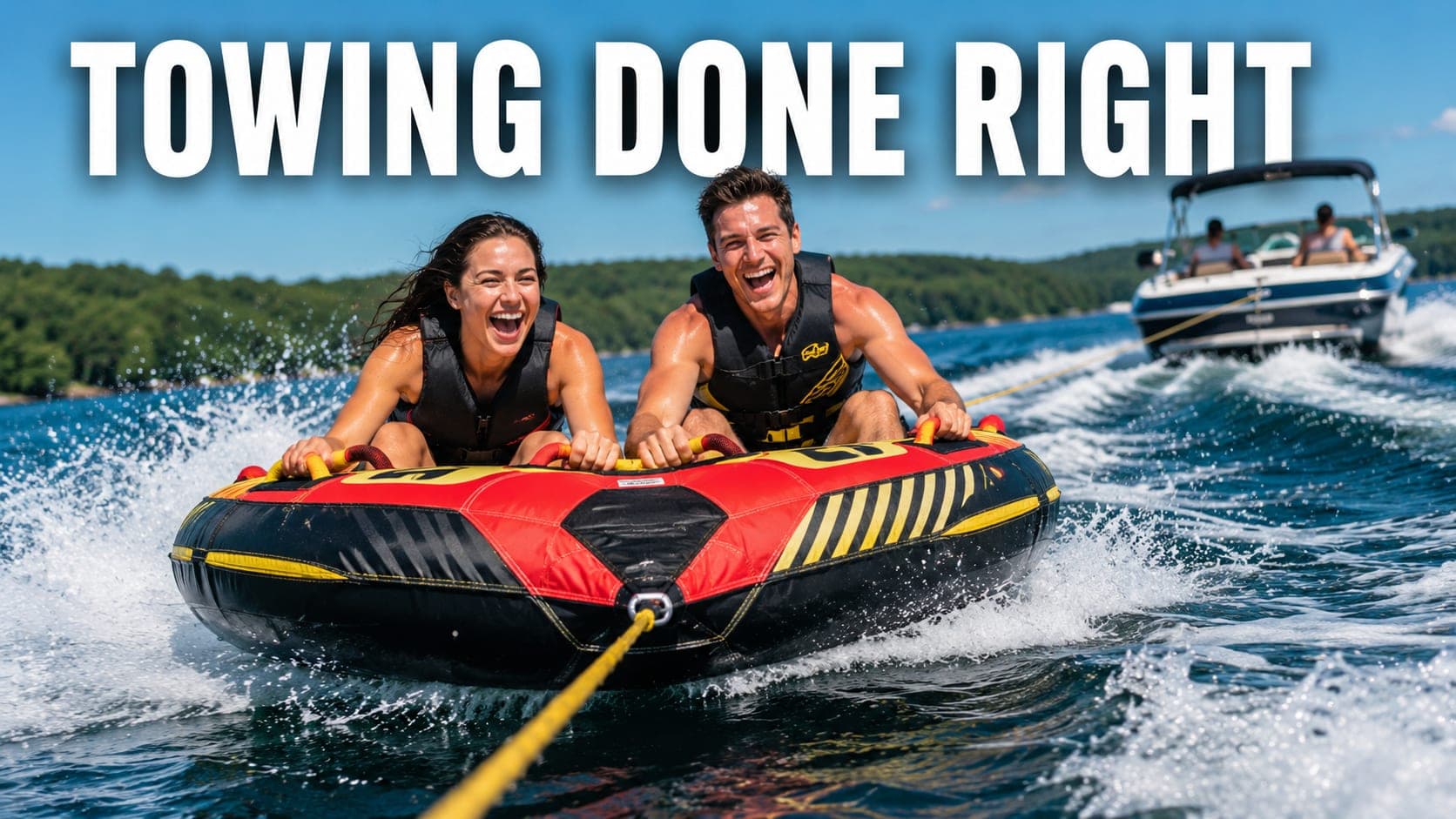

Towing somebody behind the boat is about the most fun you can have on the water on a hot summer day. It's also where I see more close calls than just about any other activity, because the person having the most fun is the one with the least control over what happens next. The good news is that safe towing isn't complicated. Get a few habits right and you can pull tubers, skiers, and wakeboarders all day without a single scare.
You Need a Spotter, Every Single Time
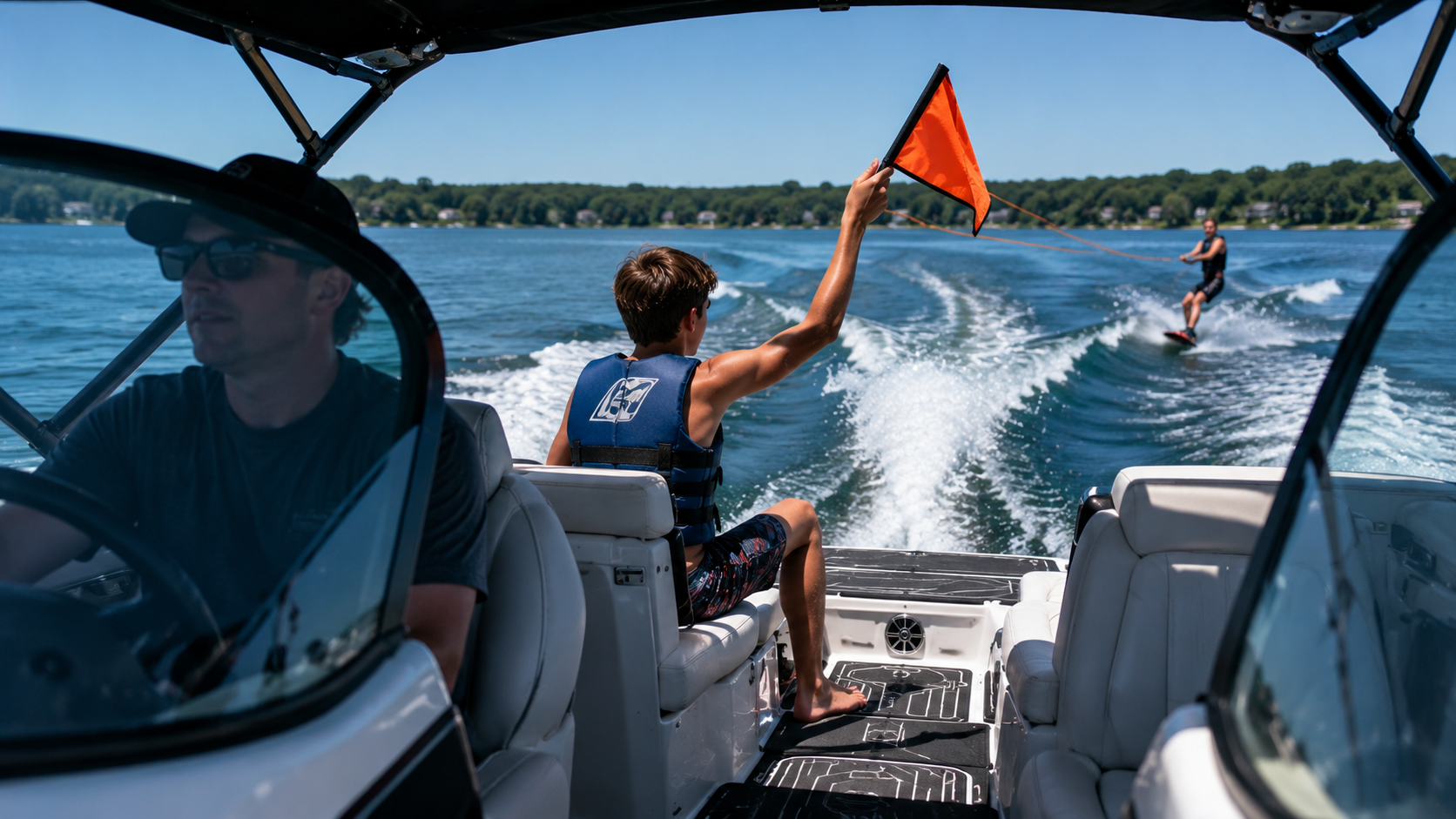
The driver cannot watch the rider and drive the boat at the same time, and in most states the law agrees — you need a second person aboard whose only job is to keep eyes on the person in the water. The spotter watches the rider, calls out when someone falls, and relays hand signals to the driver so the driver can keep their attention forward where the boat is going. Agree on a set of hand signals before anyone gets in the water: thumbs up for faster, thumbs down for slower, a flat hand for stop, and a pat on the head for back to the dock. When a rider goes down, the spotter raises a bright orange flag so other boats know there's someone in the water. This is also a great way to bring kids into the day with a real job — the same kind of clear roles that make family boating safer overall.
Gear: Ropes, Jackets, and Matching the Tow to the Boat
Use the right rope for the sport. A tube rope, a ski rope, and a wakeboard rope are not interchangeable — they're rated for different loads and lengths, and a rope meant for a single skier can snap under the drag of a big tube loaded with three people. Check your rope for frays and worn spots before the season and replace it when in doubt. Everyone being towed wears a proper life jacket, not a foam toy — a well-fitted PFD keeps a stunned rider face-up after a hard fall, which is the whole point. If you're not sure what each person aboard should be wearing, it's worth sorting out the right jacket for every body type before the first tow. And know your boat: an underpowered boat struggles to pull a heavy tube, and an overpowered one can launch a beginner before they're ready. Match the speed to the rider, not the other way around.
Driving the Boat Right
Smooth is the whole job. Accelerate gradually when a rider gets up so you're not yanking them off the handle, and hold a steady speed once they're up — most tubing happens around 15 to 20 miles an hour, skiing a bit faster, and beginners slower than you think. Keep your turns wide and gentle, because a tight turn whips the rider on the outside of the arc at a much higher speed than the boat, and that's how people get hurt or flung into something. Always know where your rope is when you slow down so it doesn't wrap a prop, and give yourself a wide buffer from other boats, swimmers, docks, and the shoreline. When a rider falls, circle back slowly on the rider's side so you can see them the whole time, and put the engine in neutral well before you reach them.
Pick Your Water and Your Timing
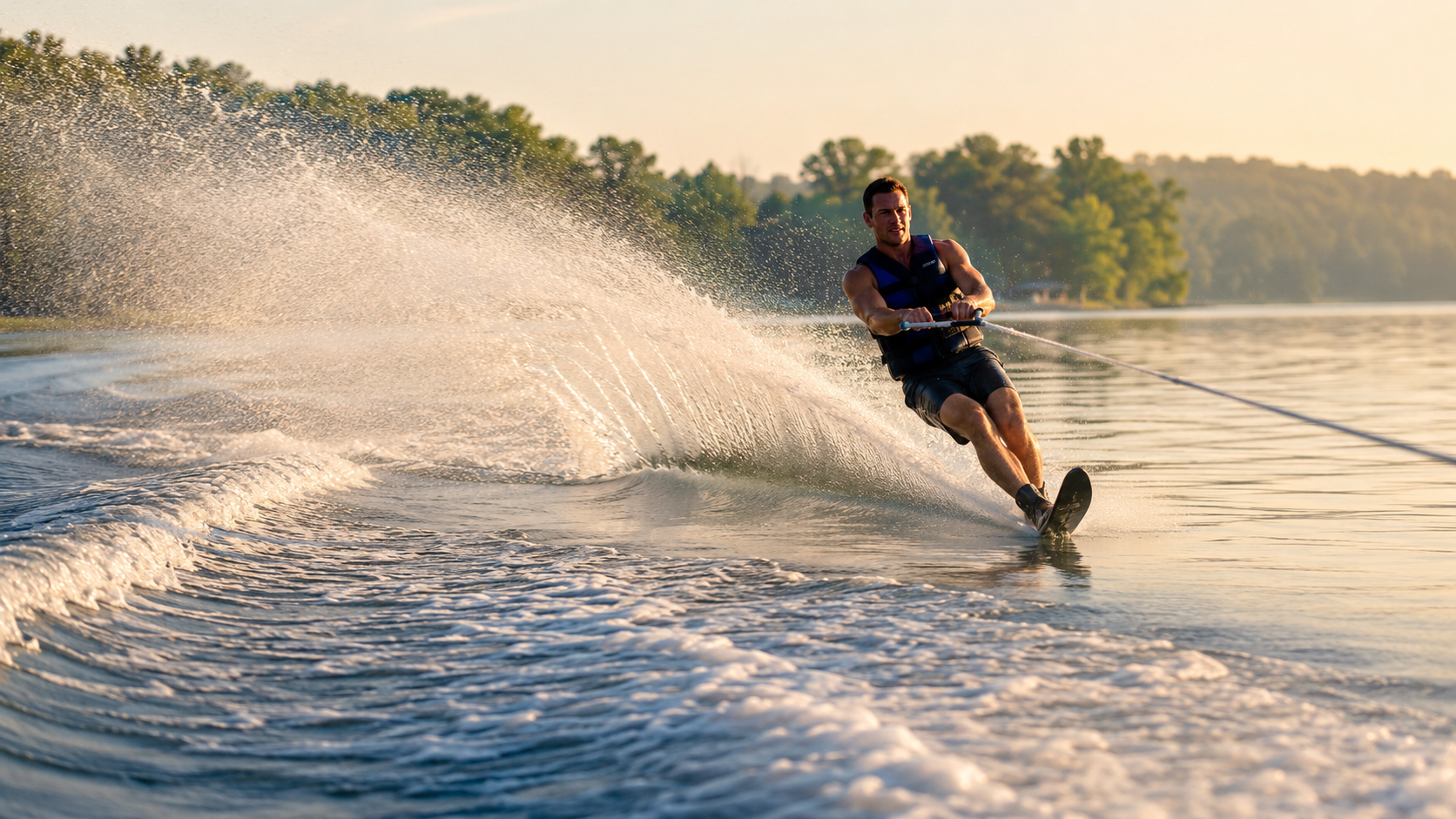
Where and when you tow matters as much as how. You want open, uncrowded water with room to make long passes without constantly turning. Early morning is usually the best time — the water's glassy, the crowds haven't shown up, and there's far less traffic to dodge. Weekends and holiday afternoons are the opposite, and trying to tow through a packed waterway is asking for trouble. If you're newer to all this, towing is one of those activities where the rookie mistakes are easy to avoid once somebody points them out. Pay attention to swim areas and no-wake zones, and never tow anyone after dark — if you can't see clearly, the day is done.
Towing is one of the great joys of summer boating, and keeping it safe doesn't mean keeping it boring. A dedicated spotter, the right gear, a smooth hand on the throttle, and a little common sense about where and when you run will keep everybody smiling and in one piece. Get those right and you'll be the boat every kid in the family wants to ride behind. Got a go-to towing setup or a hard-won lesson from behind the boat? Share it in the comments — somebody's first-timer this weekend will thank you.