


Nothing empties a boat of good vibes faster than one green-faced guest hanging over the rail. You planned the perfect day on the water, and twenty minutes past the breakwater somebody’s done for. Seasickness is one of the most common reasons people decide boating “isn’t for them,” and that’s a shame, because most of it is preventable. Once you understand what’s actually happening and how to get ahead of it, you can keep your whole crew comfortable and coming back for more.
Why Seasickness Happens in the First Place
Seasickness comes down to a disagreement inside your body. Your inner ear feels the boat rolling and pitching, but if your eyes are locked on a fixed point — a phone, a cooler, the cabin sole — they’re telling your brain you’re sitting still. Your brain gets two conflicting reports and responds the way it responds to a lot of confusing signals: nausea. That’s why the people who get sick are almost always the ones looking down at something, and why the person at the helm rarely does. Understanding that mismatch is the key to everything else, because every prevention trick is really just a way to get your eyes and inner ear back on the same page.
Win the Battle Before You Leave the Dock
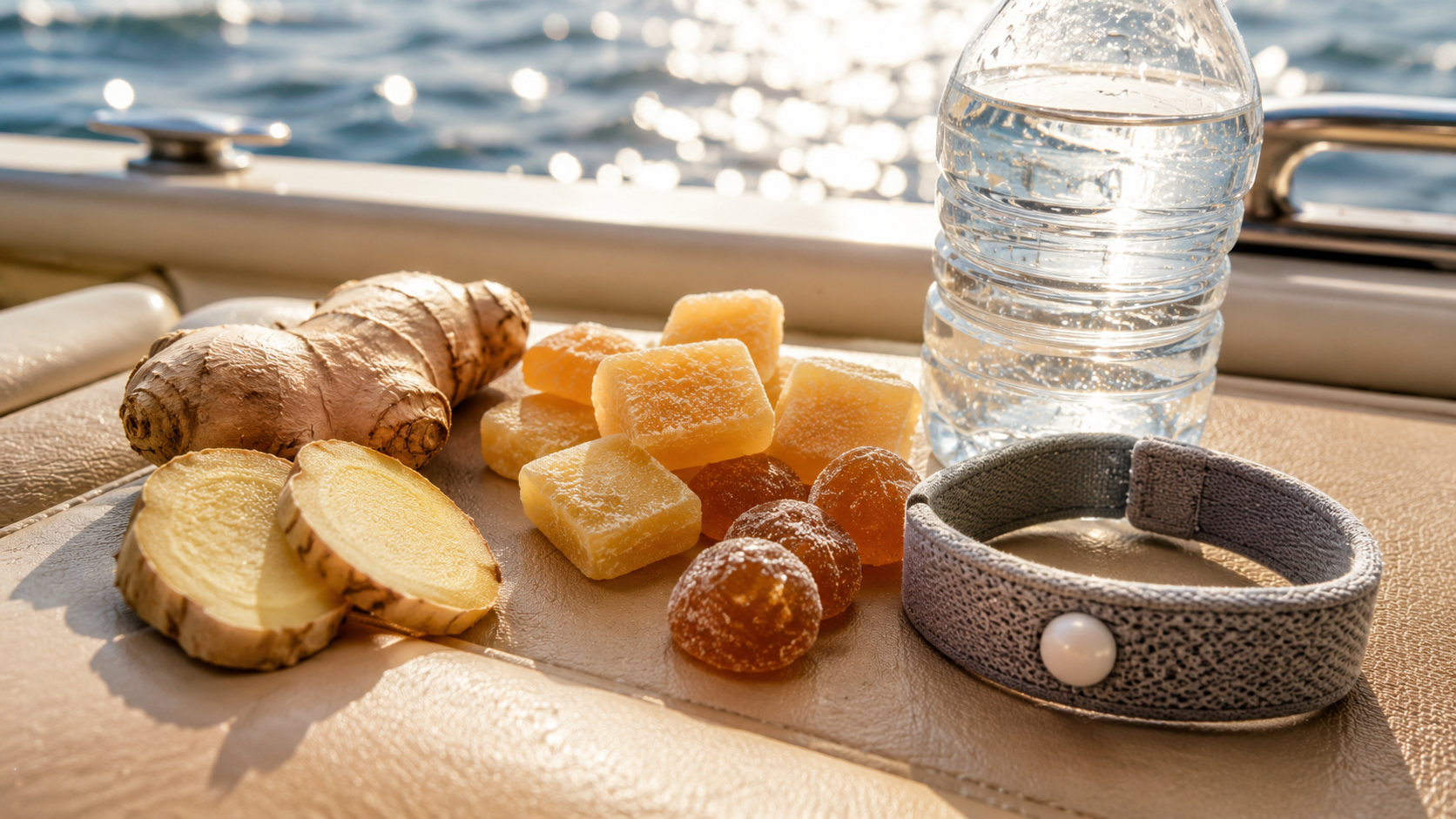
A lot of seasickness is decided before the lines come off. Show up rested — exhaustion makes everyone more susceptible. Eat something light and bland beforehand; an empty stomach is just as bad as a greasy, heavy one, and a plain snack underway keeps things settled. Go easy on the alcohol the night before and the morning of, because a hangover and a rolling deck are a miserable combination. If you or a guest is prone to it, over-the-counter remedies like meclizine or dimenhydrinate work well, but only if you take them an hour or so before you head out — swallowing a pill after the nausea starts is mostly too late. Ginger in any form, candies, capsules, or real ginger ale, genuinely helps some people and is worth keeping aboard. And before you even commit to the day, it pays to know what kind of water you’re heading into; learning to read the forecast before you leave the dock lets you pick the calmer window and skip the day that’s going to beat everyone up.
[IMAGE 1 — thumbnail placement reference: see image-prompts.txt]
Position Yourself the Right Way Underway
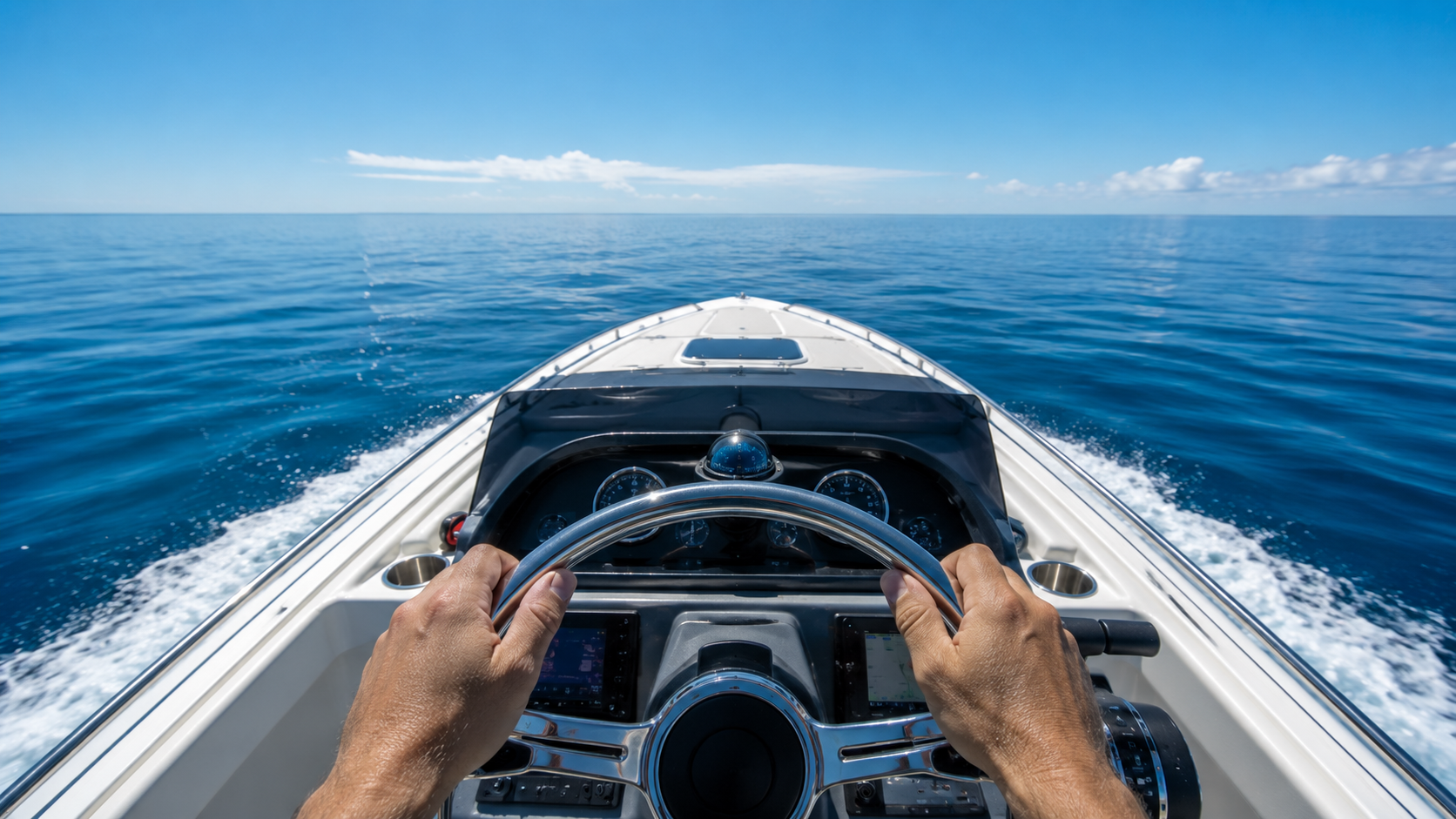
Once you’re moving, where someone sits matters enormously. Keep your eyes on the horizon — it’s the one fixed reference that agrees with what your inner ear is feeling. Get people up in the fresh air and out of the cabin, where fumes and a closed-in view make things worse fast. The center of the boat moves the least, so that’s the spot for anyone feeling shaky, not the bow, which pitches hardest. Fresh air, a clear view forward, and something to do with your hands all help. This is also why putting a queasy guest on the wheel can work wonders — the person steering is watching the horizon and anticipating the motion, which is exactly what a struggling stomach needs.
[IMAGE 2 — boater eyes on the horizon from the cockpit, no text. See image-prompts.txt]
What Actually Helps When Someone Goes Green
Sometimes it hits anyway, and how you handle it matters. Get the person to the rail on the downwind side — being sick into the wind is a lesson nobody forgets twice. Have them sit low and central, eyes on the horizon, sipping water or flat soda in small amounts. Cool air on the face helps, and so does loosening tight clothing. Don’t send them below to “lie down and rest” unless they truly need to; the cabin usually makes it worse. And ease off the throttle if you can — slowing down and quartering the swells instead of pounding straight into them smooths out the ride for everyone. If you’re boating with kids, keep a closer eye on them, since they often won’t say anything until they’re really struggling; a little planning around your youngest crew goes a long way toward keeping a bad moment from defining the trip.
[IMAGE 3 — ginger remedies and water on the deck, no text. See image-prompts.txt]
Keep Your Crew Coming Back
The reason this matters so much is simple: one bad bout of seasickness can put a person off boating for good, and one smooth, comfortable day can hook them for life. New boaters especially tend to blame themselves when really they just needed a calmer day and a seat facing forward. If you’ve got first-timers aboard, set them up for success — it’s one of the easiest first-trip mistakes to avoid, and getting it right means they’ll be asking when they can come out again.
Seasickness has a reputation for being some unbeatable curse, but the truth is most cases come down to preparation and position. Pick your weather, prep your crew, keep eyes on the horizon, and you’ll head off the vast majority of it before it ever starts. Got a remedy that works for you or your guests? Drop it in the comments — every boater has their own trick, and the more we share, the more good days we all get on the water.