



If your outboard ran fine last fall and now it sputters, stalls, or won't hold an idle, don't blame the engine first. Nine times out of ten the real culprit is sitting in your fuel tank. Ethanol-blended gas — the same E10 you pump at almost every road station — is quietly chewing through fuel systems on boats all over the country, and most owners never connect the dots until they're stranded.
Here's the thing: ethanol does things in a boat that it never does in your car. Your truck burns through a tank in a week. Your boat might sit for a month between trips, and that downtime is exactly when ethanol goes to work on you. If you want a season without fuel headaches, it pays to understand what's actually happening in that tank.
What Ethanol Actually Does to Your Fuel System
Ethanol is alcohol, and alcohol loves water. It's hygroscopic, which is a fancy way of saying it pulls moisture straight out of the humid air around your boat. Every time the temperature swings and your tank breathes, a little more water comes in and the ethanol grabs onto it. On the water, where you're surrounded by humidity day and night, that process never really stops.
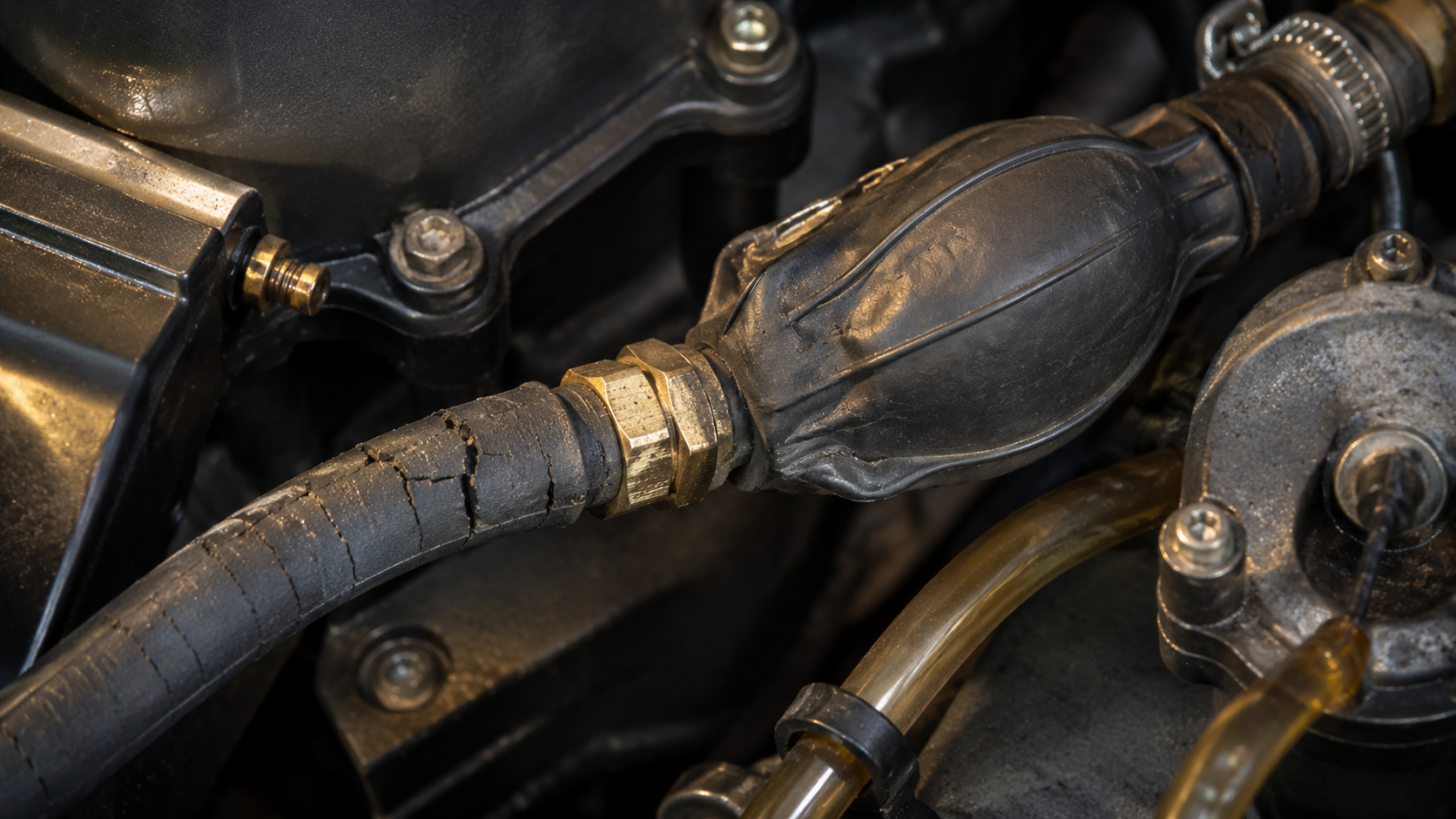
On top of that, ethanol is a solvent. In an older boat it scrubs loose all the varnish and gunk that's been coating the inside of your tank and fuel lines for years, then carries that debris straight into your carburetor or injectors. It also goes after rubber. Fuel lines and primer bulbs that were never rated for alcohol get soft, brittle, and start to crack — which is one of the most common problems I see on boats that have sat through a winter.
The Phase Separation Problem
The real nightmare is something called phase separation. Ethanol can only hold so much water before it gives up and drops to the bottom of the tank, taking the water and a chunk of the fuel's octane with it. Now you've got a layer of corrosive ethanol-water sludge sitting right where your fuel pickup draws from. That's the stuff that ruins a morning at the ramp.
Once fuel has phase separated, there is no additive on the shelf that puts it back together. You can't shake it, treat it, or burn your way through it safely. The only fix is draining the tank and starting fresh, which is a miserable, expensive job. Everything worth doing here is about preventing that layer from ever forming in the first place.
How to Protect Your Engine
Start with fuel that hasn't had time to go bad. Buy what you'll actually use in a few weeks instead of topping off a big tank you'll drain slowly. If you can find ethanol-free gas — a lot of marinas and some road stations carry it — pay the extra and use it, especially in small outboards and anything with a carburetor. Those engines are the least forgiving of ethanol's bad habits.
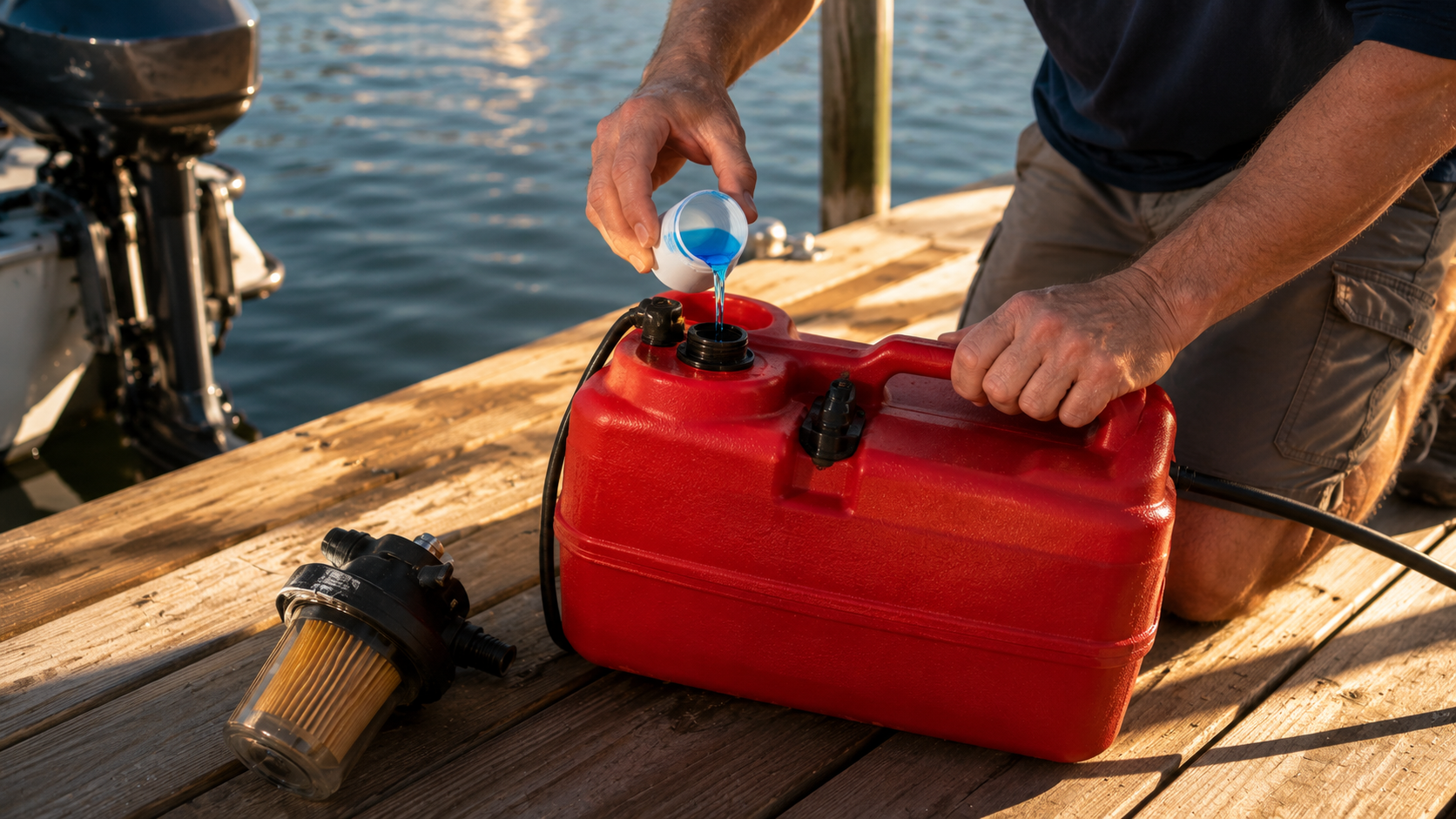
If you're running E10, add a marine-grade fuel stabilizer with an ethanol treatment every single time you fill up, not just before storage. It won't reverse phase separation, but it slows oxidation and helps the fuel tolerate a little moisture before it separates. Pair that with a good ten-micron fuel-water separating filter and check the bowl regularly — that filter is your early warning system, and a few ounces of water in it tells you to act before the engine ever feels it.
For longer breaks, keep the tank close to full to cut down the air space where condensation forms, and run the engine long enough that treated fuel reaches the carburetor before you walk away. Small portable tanks are easier still: run them dry at the end of a trip and you've got nothing left to spoil. This is the same routine I walk through every spring when I bring a boat out of storage and want it running right on the first start.
When the Damage Is Already Done
If you're already chasing a rough idle or a no-start, work from the tank forward. Pull a sample from the bottom and look for a separated layer or cloudy fuel. Replace any fuel line that feels stiff or sticky, swap a primer bulb that won't stay firm, and clean or rebuild the carburetor if old fuel left it varnished. It's tedious work, but it's honest work, and it beats replacing a powerhead because a fifteen-dollar filter got ignored.
Ethanol isn't going away, and for most of us it's the only fuel within easy reach. The boaters who never think about it are the ones who quietly do the small things right — fresh fuel, the right stabilizer, a clean separator, and a tank that doesn't sit half empty for months. Do that, and the gas in your tank stops being the weakest link in your day on the water.
Have you been burned by bad fuel — or found a stabilizer routine that works for your setup? Drop it in the comments so other boaters can dial in their own engines before the season gets going.