



A fire on the water is the one emergency where the clock runs faster than you ever expect. You can't pull over, you can't call the fire department to come put it out, and you're surrounded by fuel, fiberglass, and wiring that all burn well. The good news is that most boat fires are both preventable and survivable if you've done a little homework before you ever leave the slip. Here's how I think about fire safety on my own vessel, and what every boater should have squared away before the season really gets going.
Why a Boat Fire Moves So Fast
On land, a small fire gives you time. On a boat, the same flame is feeding on resin-rich fiberglass, foam flotation, fuel, and a closed engine space that traps heat and vapor. Gasoline vapor is heavier than air, so it sinks into the bilge and pools there where you can't see it, and it only takes a spark to set it off. A cracked fuel line or a weeping connection — the same kind of fuel-system trouble that ethanol blends quietly cause over time — can fill that low space with vapor while everything looks perfectly normal up top. That's why fire prevention starts with your nose: if you ever smell fuel, you run the blower, you find the source, and you do not start the engine until it's gone.
Know Your Extinguishers and Keep Them Current
Carrying an extinguisher isn't the same as being protected, because an expired or undercharged bottle is just dead weight bolted to the bulkhead. The Coast Guard updated its rules a few years back, and as of April 2022 disposable, non-rechargeable extinguishers carry a 12-year expiration date stamped on the bottle — once that date passes, the unit no longer counts and needs to be replaced. Newer recreational boats under 26 feet are required to carry unexpired extinguishers of the current class, so it's worth checking the manufacture date on every bottle aboard. Beyond the legal minimum, I'd rather have one more than required. Check that the gauge needle sits in the green, give each bottle a shake every month or so to keep the powder from packing down, and make replacing an expired unit part of the same walk-through where you inspect your safety gear before launch.
Mount Them Where You Can Actually Reach Them
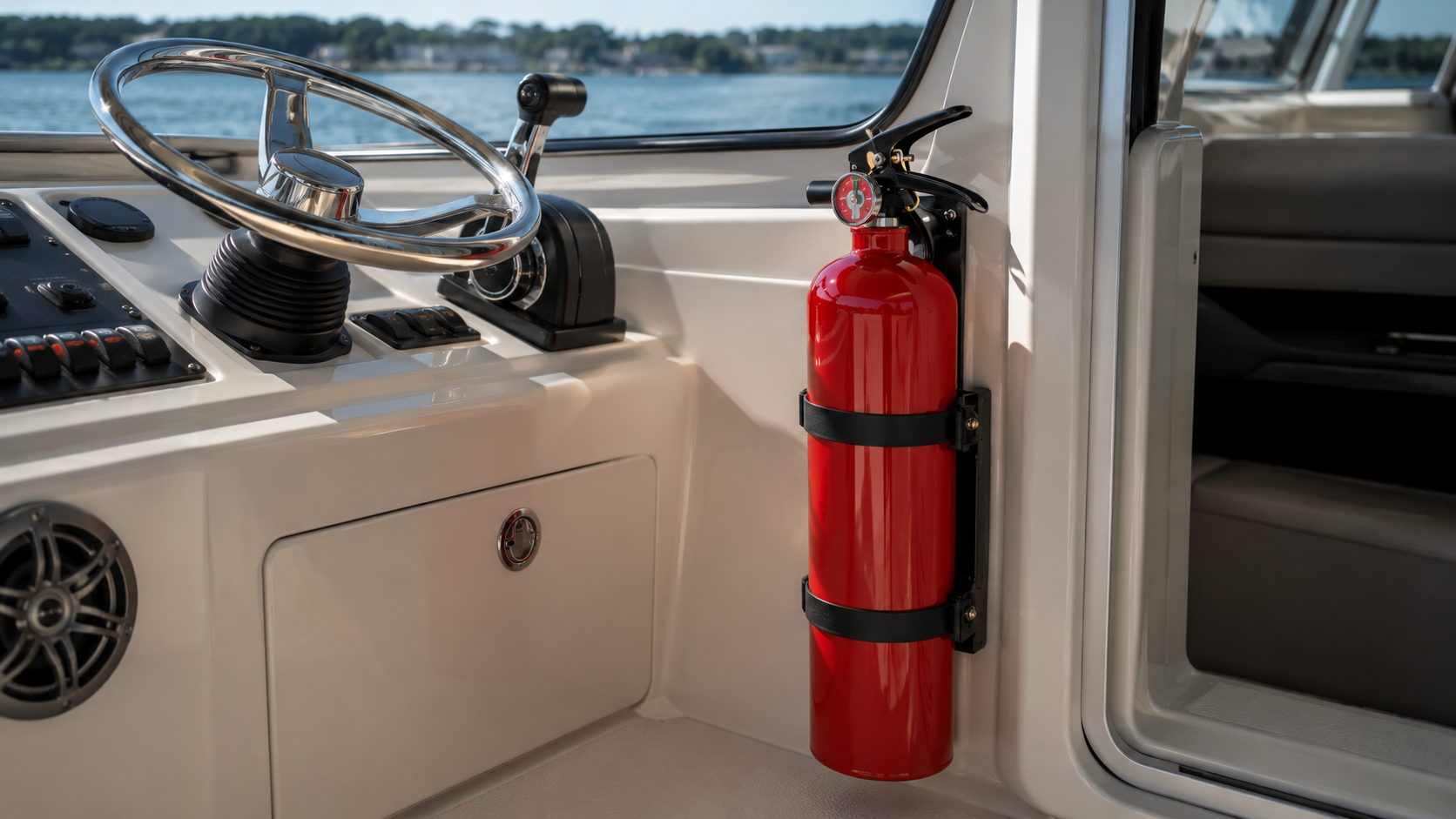
Where you put an extinguisher matters as much as having one. The instinct is to tuck it in a locker out of the way, but a fire blocks access to half the boat in seconds, so you want a bottle reachable from the helm, another near the galley or any open flame, and one accessible to the cockpit without having to cross the engine space to get it. The whole point is that you can grab one no matter where the fire starts and which way you're forced to move. Mount them in their brackets, not loose in a drawer where they slide under everything, and make sure every adult aboard knows where each one lives. In an emergency nobody has time to go searching, and a guest who can put their hand on a bottle in the dark is worth a lot.
What to Do in the First Thirty Seconds
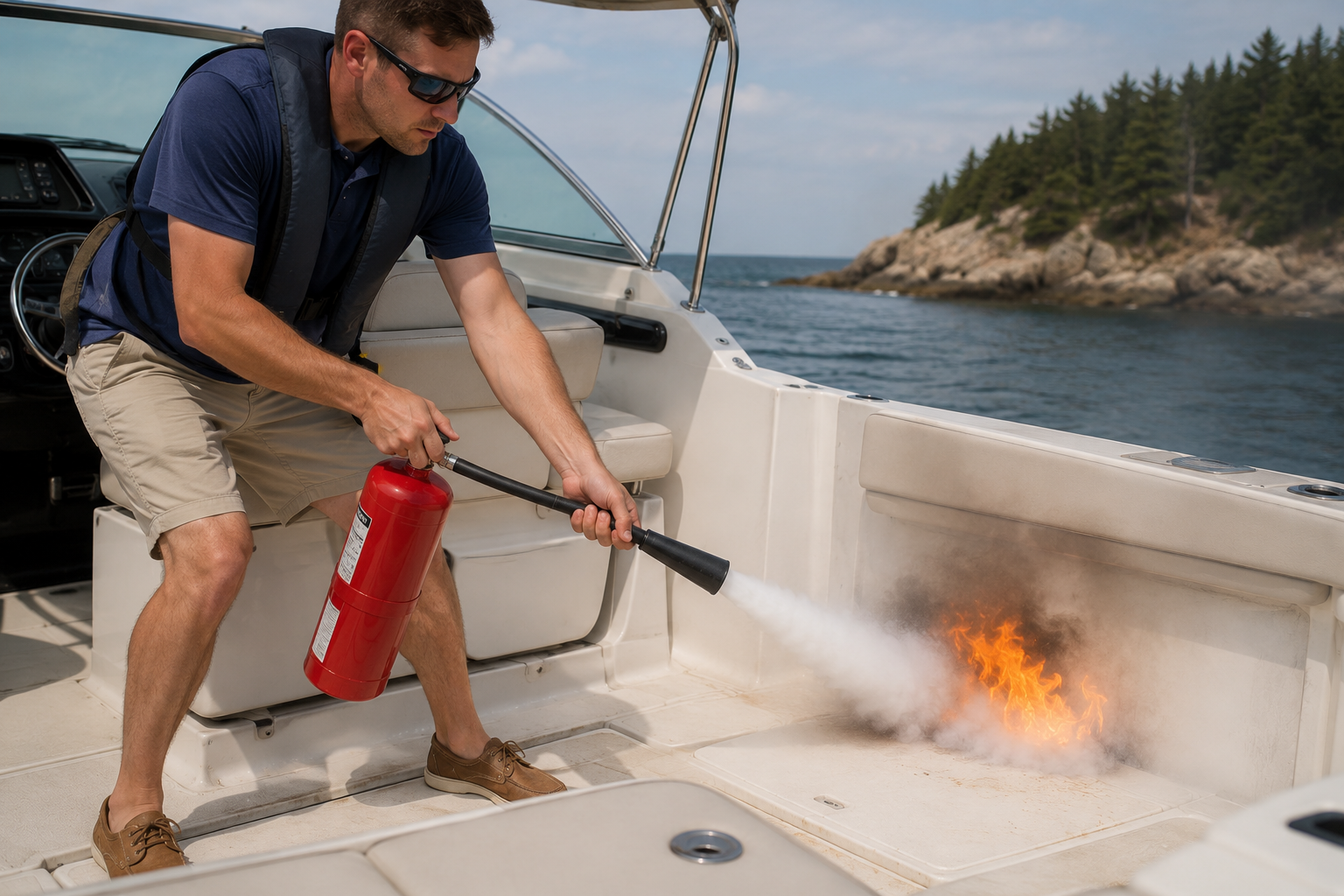
If a fire does start, the first thirty seconds decide everything. Get everyone into life jackets immediately, because your attention is about to be somewhere else and the situation can turn fast. If it's an engine fire, do not throw the hatch wide open — that floods the fire with oxygen and turns a contained problem into a fireball; use the port if your extinguisher has one, or crack the hatch just enough to aim. Pull the pin, aim low at the base of the flames, and sweep. Turn off the fuel supply and the battery if you can reach the switches safely. And get on the radio early rather than late — a clear mayday call on the VHF gets help moving while you still have a boat under you, and it's a lot easier to cancel a call than to make one once the flames are between you and the helm.
Make It Routine, Not an Afterthought
Fire safety isn't dramatic work, which is exactly why it gets skipped. Nobody wants to spend a sunny Saturday checking expiration dates and sniffing the bilge. But the boaters who never have a bad day on the water are usually the ones who made this stuff a quiet habit — blower before start, a nose check for fuel, extinguishers charged and within reach, and a crew that knows the plan. Spend twenty minutes on it now and you'll likely never think about it again. Have a fire-safety habit that's saved you grief, or a setup that works well on your boat? Drop it in the comments — this is one area where sharing what works genuinely keeps people safe.